Showing posts with label wildife. Show all posts

Friday, 5 August 2016

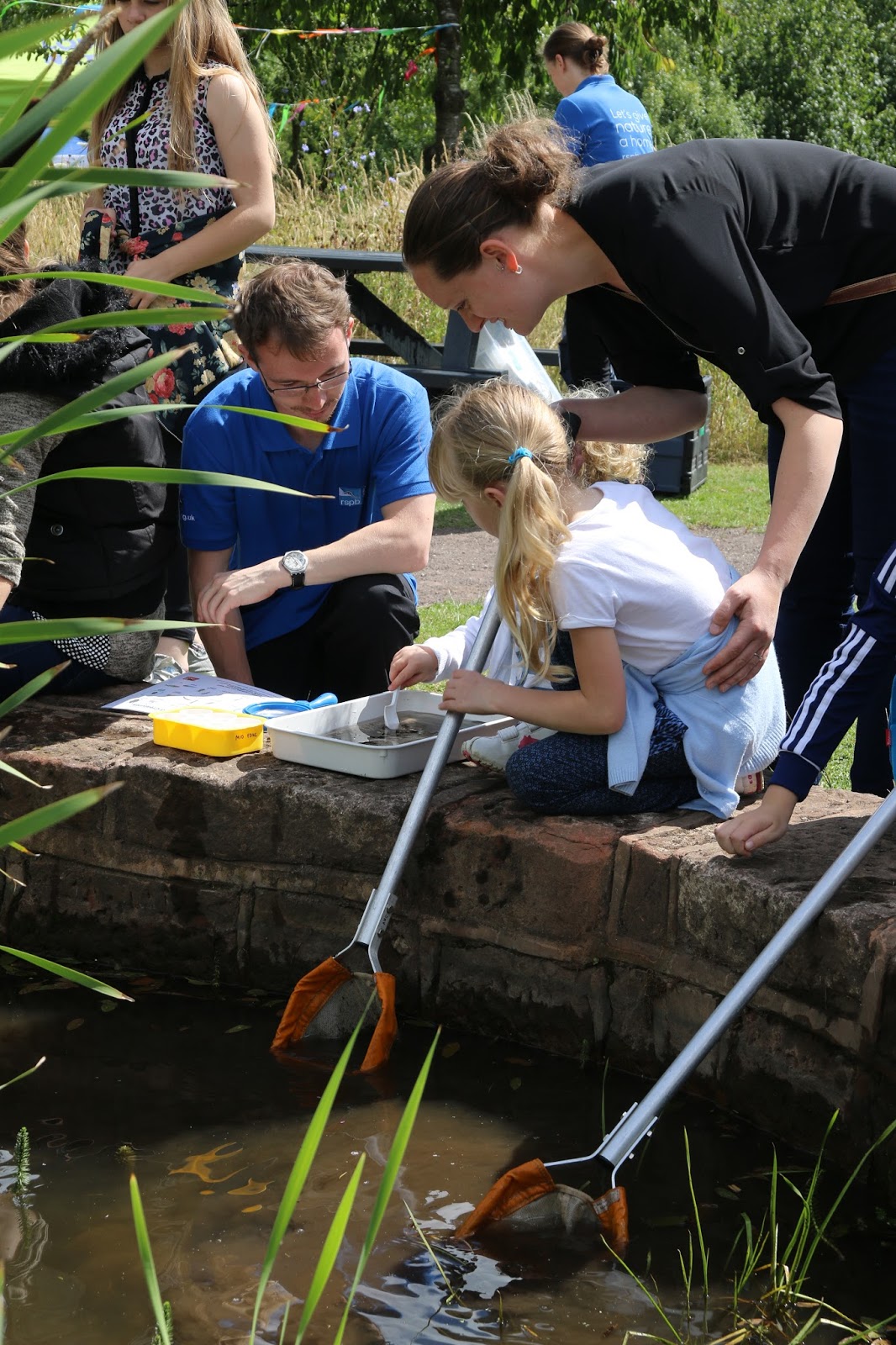
Pond Dipping at RSPB Sandwell Valley

The summer holidays are in full swing. Not managed to get to the beach this summer? Have a go at pond dipping, an activity similar to rock pooling – available at RSPB Sandwell Valley!

Nature’s reach is open 10am-5pm Tuesday to Sunday throughout the holidays. Come before 4pm to hire your equipment. In your set will be a net, a white tray to view creatures, a magnifying glass and spoon, for just £3 (Please do not use your own nets as this could contaminate our ponds and upset the little critters).

There are so many creatures to see in our ponds. From phantom midge larvae, leeches to newts and water beetles among many others!

Leech - Jackie Cooper (rspb-images.com)

Quick Fire Pond Creature Facts

  • Did you know newts can regenerate many parts of their bodies, their limbs, eyes and even heart!
  • Greater Water Boatman, these common pond creatures eat through a tube that they stick into tadpoles and suck out all the yummy juices!   
  • Try and find a caddisfly nymph, these amazing youngsters are experts at camouflage. You better look closely otherwise you might think they’re just sticks and stones!  


A newt I discovered when pond dipping

Top Tips for Pond Dipping

  1.  In open water use a figure of eight sweep of your net to ensure you catch some creatures
  2.   In more weedy areas use a back and forth motion so you can catch the bugs that get dislodged
  3. Remember that you are taking the creatures from their homes. Be kind to them and when you finished looking, gently return them to their habitat.
  4. Be patient and look carefully at your discoveries. Some things might be hiding or creatures like the phantom midge larvae are nearly invisible – like ghosts!

If you want any other information just call our visitor centre Nature’s Reach on 0121 357 7395 or email alex.sharrod@rspb.org.uk.

Remember – pond dipping isn’t just for kids – I’m 24 and I absolutely love it! You never know what you might find.


Imogen, Connecting People and Nature Intern, RSPB Sandwell Valley

Thursday, 7 July 2016

Summer in the sun at Sandwell

The summer holidays will soon be here. There are plenty of activities happening at RSPB Sandwell Valley to keep you and your little ones entertained for hours!

The Big Wild Pyjama Party on Saturday 30th July is a treat not to be missed. Join us for lots of exciting night time adventures. From cooking around a camp fire, storytelling and bat walks, be sure not to miss out. 

This event begins at 6pm until 10pm. Price: £10 adults, £5 children and a 20% discount for members. Booking is essential.  Follow this link for more information and to book. https://www.facebook.com/events/191253961276750/

Wild Wednesdays will begin on Wednesday 27th July and will be held every Wednesday throughout the school holidays. Each week will have a different theme, from pond dipping to den building with some great practical activities.
No need to book. Just arrive on the day. Prices are: RSPB members - £4 per child, Non-members - £5 per child. For more information email alex.sharrod@rspb.org.uk or call Nature's Reach on 0121 357 7395. https://www.facebook.com/events/1788562538096848/


Want to enjoy the early Sunday mornings with some marvellous moths and beautiful butterflies? Come and enjoy the view at Natures Reach our visitor centre whilst discovering the world of moths. From 8am-10am, beginning on Sunday 31st July and every Sunday throughout August. Price just £5 for adults, £3 for children with a 20% discount for RSPB members. https://www.facebook.com/events/797875030348098/

 Chris Shields (rspb-images.com)

Spend some time away from your computer, tablet and TV.  Enjoy some hands-on activities at RSPB Sandwell Valley this summer. We have self led activities available every day we are open. Come along, get outside and enjoy some pond dipping, bug hunting and go out on some trails.


If you would like to know more information about the above activities, please get in touch with the reserve. 

Imogen, Connecting People and Nature Intern, RSPB Sandwell Valley.

Thursday, 1 October 2015

Fly by Night - Bat and Moth Night, September 2015

We had a fabulous bat and moth night on Saturday 5th September. We had a great number of visitors of the human variety, and some very obliging bat and moth visitors too.

We started the evening at Nature's Reach with a really informative presentation about bats from Morgan, our expert. We learnt all about bat behaviour and the various beasts we can find both here and worldwide.
Bat Detector (Tim Hunt)
Then we got our mitts on the super-cool bat detectors! Morgan treated us to a few different types, some relatively simple: detecting bat sounds based on the frequency they were tuned to, and some a bit more techy: capable of recording a number of different bat sounds, all at the same time, for analysis later on.

Bat Walk (Tim Hunt)
And so we were off! We walked down to the hide and within minutes, we had bats! We stood on the path by the Mini Beast Meadow listening intently to Morgan's instructions on using the detectors and were quickly interrupted by our winged friends flying overhead. We saw several pipistrelles on our way down to the lakeside hide and were treated to lots more, while shining our torches out across the water.

Toads in the hole
Before heading back up to see what moths were about, volunteer (and regular blogger) Tim spotted some more obliging beasts hanging out in the bee bank. We saw the unlikely trio of two newts and a toad sharing a hidey hole and plenty more scattered about the slope.

Moth Trap (Tim Hunt)

On our return to the visitor centre, butterfly and moth expert, Mike gave a brief talk on what we'd be likely to find and gave some great tips on identification. Then it was off out to the moth traps. We were quite early for our winged friends but still managed to see a good number.

Large yellow underwings were out in force and we had a fabulous swallow prominent. Small square-spots made a good showing, as well as a silver y, a couple of copper underwings and old ladys.
Large Yellow Underwing (Chris Shields www.rspb-images.co.uk)
We also had phoenix, flame shoulder, white shouldered house moth, double sqaure-spot, setaceous hebrew character, angle shades, six-striped rustic, common rustic and flounced rustic.

A fantastic night was had by all and we can't wait for the next one! A big thank you to Morgan, our bat expert, and our brilliant team of moth-ers for making it possible.

Jenny, Connecting People and Nature Intern.

Tuesday, 25 August 2015

Home Grown Wildlife

Up until a few years ago I had always looked at overgrown areas of my garden as a bad thing, and that they needed maintaining like a lawn. 

It suddenly occurred to me one day that there wasn’t much insect life. In fact there wasn’t much life in general. 
It was time for change! Since then, I have been letting areas of my garden grow naturally. As another attempt at creating a home for wildlife, I placed wooden boards throughout the garden, which mammals and hopefully reptiles would utilise.

One of my wildlife boards amongst the grass
Juvenile bank voles in a nest under one of the boards

My results were astonishing. Within one week of placing down the boards I had mice, voles, shrews, toads and frogs living underneath them.

Within a few more weeks I had nesting voles under every board, even multiple nests under some. It was amazing to know that I had created an environment whereby creatures such as these voles, could see it as a home. 

Bank voles become sexually mature at just five weeks old. Female bank voles can produce up to four or five litters a year which explains the numbers found within my garden.


Adult bank vole


Juvenile bank vole

I think that until people can actually see how diverse wildlife in their gardens can be, things will not change for the greater good. Seeing is believing, so hopefully this blog post will excite you to let your garden grow. It’s really as simple as that. It doesn’t cost anything. Just sit back and watch your garden grow. The long grass provides shelter and protection from the elements for many creatures.

Since starting the study of my garden I have wanted to photograph a shrew with my field studio. Unlike the other mammals in my garden the common shrew is very elusive. I was once fortunate enough to come across a nest containing a litter of common shrews, but these types of situations are best left undisturbed.

I found this shrew (pictured below) under one of the boards that I placed down in the paddock. The image does not show size but I can tell you it was only around 5cm long (body only), so very small. It's long pointed nose and tiny eyes make the shrew stand out from other mammals such as voles and mice. Their short life-span means that it is uncommon for them to live for more than 12 months. Their diet consists of mainly insects but they will also eat slugs, snails and earthworms. The common shrew can be found widespread throughout Britain and comes in at second place in being the most numerous Mammal in Britain.


Common shrew

The wood mouse is one of the most common rodents found here in the UK. This one in particular lives under the stone slabs outside our kitchen. Every day I watch as they harvest up the spilt bird seed from the feeder that hangs above. Where there is food you will most likely find mice, or at least evidence of their nocturnal activities. In our conservatory there isn’t a seed packet that hasn’t been opened or bulbs that haven’t been nibbled.

From a photographic point of view, they are one of the hardest subjects to photograph using my field studio, due to their athletic ability and lighting fast reactions. So getting these shots was rewarding and a welcome change of subject.

Wood mouse
For the first time ever I came across a hedgehog in the garden. I’m still amazed at how bizarre they are with their spine-covered bodies and with their ability to curl up into tight ball. These amazing creatures are one to look out for as their numbers are in decline.


Hedgehog in defensive position (left) and non defensive (right)
Sometimes the places you least expect can become occupied by nature. This bag of builders sand was left over from some work we had done on the house. After several months the bag and it's contents had become a home for a whole host of wildlife.

This bank vole had built a nest in the sand bag. The nest has been built with dried grass. When I took this picture the voles had very recently collected some fresh grass to bulk it out. Nothing like a bit of home improvement!


Juvenile bank vole emerging from nest in builders sand bag
This toad is a full time resident in the bag.
   
This year had been an exciting one. Three out of the five boards I put down had multiple grass snakes underneath them. Being only juveniles it meant that I had breeding grass snakes in the vicinity, which was great to know.

Juvenile grass snake basking on top the builders sand bag   
Juvenile grass snake profile

I have very recently made use of this old children’s playhouse. Rather than dispose of it I cut the roof off it to make it into a grass cuttings box. I intend to attach a tarpaulin over the top. This should hopefully warm up in the sun and together with the warmth, produced by the decaying grass, should create a haven for grass snakes.


It's worth seeing what you have in your garden that could be made into a home for wildlife. Even if it’s an old bucket, you could upturn it, creating a dry home for some creature in need. Give it a go, you may be pleasantly surprised.

If you'd like to find out more about the mammals residing on the RSPB Sandwell Valley reserve (maybe even meet a few!) and more about how you can encourage them to visit your own garden, why not join us for our Marvellous Mammals event on Sunday 25th October?? Find out more about it here... https://www.facebook.com/events/1686105998287474/

Tim Hunt (RSPB Sandwell Valley volunteer)